Emperor Penguin Secrets
Ravish Kumar
| 13-02-2026
 · Animal Team
A line of black-and-white figures stands against a horizon of endless ice, barely moving as the wind sweeps across the frozen ground. At first glance, they look calm, almost still.
But inside that quiet scene is one of the most demanding parenting stories in the natural world—played out in temperatures that can quickly endanger exposed skin.
Emperor penguins live where survival seems almost impossible, yet their routines are precise, patient, and surprisingly tender. Watching how they endure harsh seasons reveals small lessons about resilience, cooperation, and timing that feel close to everyday life, even in such a distant place.
Built for extreme cold
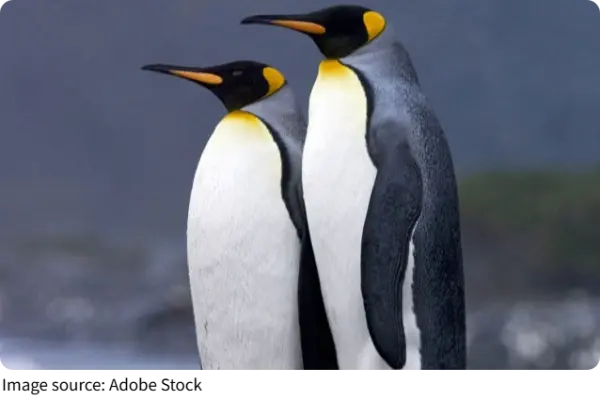
Life in Antarctica demands specialized design, and emperor penguins are shaped for it. Several physical traits work together to conserve heat and protect energy.
The surprising ways zebra patterns help them survive
Understanding the sleep habits of these nocturnal hunters
The surprising reasons behind your cat’s puffed-up fur
Discover the fascinating life of the world's largest grouse.
Discover the fascinating behaviors and role of male tree finches in nature.
Discover how donkeys have thrived for thousands of years across the globe.
Dense feather layers
Their feathers overlap tightly, forming a barrier that traps warm air close to the body. This structure helps keep icy wind from reaching the skin beneath.
Thick insulation beneath the skin
A deep layer of stored energy helps reduce heat loss and provides fuel during long fasting periods. This reserve becomes essential during breeding season.
Compact body shape
Short limbs and a rounded form reduce exposed surface area, slowing heat loss. Even their posture—often leaning slightly forward—helps shield vulnerable areas.
Actionable example: If you're studying wildlife adaptation, sketch how each body feature connects directly to survival. Turning observations into diagrams makes complex biology easier to remember.
A remarkable parenting fast
Breeding begins during the darkest, coldest months. After laying a single egg, the female carefully transfers it to the male's feet before heading toward the ocean to feed. What follows is extraordinary endurance.
Egg protection on the feet
The male balances the egg on top of his feet, covering it with a warm fold of skin. Dropping it onto the ice, even briefly, can be fatal in extreme cold.
More than two months without food
While waiting for the female to return, the male survives on stored energy. Movement is minimal to conserve strength.
Precise timing between parents
The female must return before the male's reserves run out. Their reunion often happens within a narrow window that determines the chick's survival.
Actionable example: Track a long-term commitment in your own routine—such as a study schedule or fitness plan—for sixty days. Seeing progress over a fixed period mirrors the patience shown in this breeding cycle.
Strength through cooperation
Even the toughest body design isn't enough against Antarctic storms. Emperor penguins rely on group behavior to endure freezing winds.
Huddling for shared warmth
Hundreds gather tightly, reducing heat loss for everyone inside the group. Conditions in the center can be much warmer than on the outer edge.
Constant slow rotation
Penguins on the colder outer edge gradually move inward while others shift outward. This quiet exchange ensures no individual remains exposed too long.
Silent coordination
The movement happens without visible leadership. Simple awareness of neighbors keeps the entire group functioning smoothly.
Actionable example: In team projects, try rotating demanding roles instead of leaving pressure on one person. Shared responsibility often improves both morale and results.
Raising a chick in shifting seasons
When the egg finally hatches, the environment is still severe. Survival depends on careful feeding and rapid growth before sea ice begins to change.
Early nourishment from the male
If the female hasn't returned yet, the male can produce a small amount of nutrient-rich secretion to sustain the chick briefly.
Frequent feeding after reunion
Once both parents are present, they alternate trips to the ocean, bringing food back in measured portions that support steady development.
Learning independence quickly
As the season shifts, young penguins gather in groups while parents forage. This stage prepares them for life in open water.
Actionable example: Break large learning goals into stages—support, practice, then independence. This gradual shift mirrors how penguin chicks move toward self-reliance.
Why their story matters beyond ice
Emperor penguins aren't just symbols of endurance; they demonstrate how survival often depends on patience, timing, and cooperation rather than strength alone. Their lives unfold slowly, guided by rhythms of season and partnership.
Watching them reminds us that progress doesn't always look dramatic. Sometimes it's a quiet wait in the cold, a careful handoff of responsibility, or a small step forward taken together with others nearby.
The next time daily challenges feel overwhelming, picture that silent circle of penguins turning gently in the wind—each one enduring, not alone, but as part of something steady and shared.