Savings Vanishing? Find Out!

Santosh Jha
| 05-03-2026
 · Information Team
Saving money is a practice ingrained in many cultures, but not all savings are made for the same reasons.
While some save for future goals like buying a home or retirement, others save for less tangible reasons, like protecting themselves from the uncertainties of life.
This type of saving is often called precautionary saving. But why do people, especially in economically uncertain environments, save this way? Let’s explore the psychological and economic factors behind precautionary saving.
Understanding Precautionary Saving
Precautionary saving is the act of putting money aside to shield oneself from unforeseen circumstances. These can include job loss, medical emergencies, economic downturns, or any event that could cause a disruption to a person's financial stability. In regions with unstable economies, this kind of saving becomes crucial, as the unpredictable nature of the environment poses a higher risk to people’s livelihoods.
Most Investors Miss This Basis Move—And Pay Thousands More Than They Should
The Hidden Property Rule That Triggers Last-Minute Home Sale Drama
Co-Buying a House? Read This Before You Sign Anything
Your First Month After Closing Is Critical—Here’s the 7-Step Money Plan
Most Buyers Panic-Bid—Do This Instead and Keep Your Budget Intact
ot just flowers and gifts—Valentine’s Day is about care, warmth, and real connection!
Economic Volatility and Uncertainty
In countries with high levels of macroeconomic volatility, residents are more likely to save precautionarily. When a nation's economy is unpredictable, citizens often experience sudden shifts in income and employment. Such volatility leads to uncertainty about the future, compelling individuals to accumulate savings as a safety net.
For instance, in Latin American countries, where economic conditions can change rapidly, saving becomes a way for residents to mitigate risks associated with inflation, unemployment, and sudden economic crises.
Limited Social Safety Nets
Another important factor driving precautionary savings is the lack of strong social safety nets. In many developing countries, government welfare programs, such as unemployment benefits or health insurance, are either insufficient or nonexistent. As a result, residents must rely on personal savings to weather financial storms.
With no external support system to fall back on, people feel the need to save more and build financial resilience through their own resources.
Income Instability and Informal Employment
Income instability, especially for those working in informal sectors, also plays a role in encouraging precautionary savings. In many developing economies, a significant portion of the workforce is engaged in informal jobs with no fixed income. As these workers face periods of income fluctuations, they save as a precaution against times when money is scarce. Informal employment, by its very nature, offers less security and fewer benefits, leading workers to prepare for the worst-case scenario.
The Psychological Impact of Saving
The psychological component of precautionary saving cannot be overlooked. People, particularly in uncertain environments, develop a sense of insecurity regarding their financial future. Saving becomes a coping mechanism to reduce anxiety about potential negative outcomes.
It also provides a sense of control over their financial situation, giving individuals confidence that they will be able to face future challenges, no matter how unexpected they may be.
The Role of Cultural Norms
Cultural norms also shape precautionary saving. In some societies, preparing for unexpected events is seen as prudent and responsible behavior. Social expectations can reinforce saving habits even when no immediate financial threat exists.
As the U.S. Federal Reserve reports in its household financial well-being survey, nearly 60 percent of people said they had set aside money specifically as emergency savings or ‘rainy day’ funds. This highlights how common precautionary behavior becomes when people prepare for financial uncertainty.
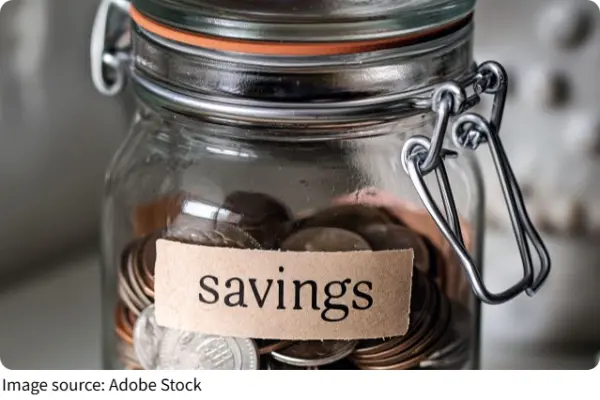
Precautionary saving arises from a combination of economic, social, and psychological factors. Residents in volatile environments are often more likely to save because of uncertainty around income and job security.
With limited safety nets and unstable income, many households build resilience through personal savings. Ultimately, precautionary saving is not just about setting aside money—it is a practical response to uncertainty and a tool for financial stability.