Safe Driving in Rain

Liam Reilly
| 17-09-2026
 · Auto Team
Rain can change familiar roads within minutes. Wet surfaces can reduce tire grip, visibility may become limited, and stopping can require more distance than on dry pavement.
The safest approach is to reduce speed, increase following distance, and make smooth control inputs. Good preparation and careful observation can also make driving in wet conditions more manageable.
Slow Down Early
Reducing speed is one of the most important adjustments we can make in the rain. Wet pavement can provide less traction, making sudden braking, acceleration, or steering more difficult to manage.
Slow down before reaching bends, intersections, busy areas, or sections where water has collected. Making these adjustments early allows the vehicle to remain more stable and predictable.
Europe’s five biggest car markets are accelerating toward electrification, but each is taking a very different route.
Energy costs threaten UK car sector recovery and future competitiveness.
EVs gain ground in Europe as petrol and diesel lose share..
FCA's new redress scheme could return €8.85bn to motorists hit by unfair car finance deals (2007–2024).
Electric and hybrid cars pushed UK registrations to their strongest July since 2019, while petrol and diesel continued to lose ground.
New-car registrations reached their strongest August in years as electric and hybrid models continued to gain ground.
Increase Following Distance
Leave more space between your vehicle and the one ahead. Extra distance provides additional time to react if traffic slows suddenly or braking becomes necessary.
The appropriate gap should increase when visibility or road conditions become worse. Avoid reducing that space simply because traffic is moving slowly.

Steer Smoothly
Sudden steering movements can make vehicle control more difficult on wet pavement. Use gradual steering when changing lanes, turning, or responding to an obstacle.
Reduce speed before entering a bend rather than relying on heavy braking while cornering. Planning the maneuver in advance helps keep the vehicle balanced through the turn.
Use Lights Appropriately
Rain can make road markings and other vehicles harder to see. Using the appropriate headlights can improve visibility and help other road users notice your vehicle.
High beams should be used carefully because reflections from rain and wet surfaces can affect visibility. Follow the lighting requirements that apply where you are driving.
Avoid Standing Water
Standing water can hide the condition of the road and may be deeper than it appears. Before reaching a flooded section, consider whether another route is available.
If the depth or condition of the water cannot be judged confidently, do not attempt to cross it. Choosing a safer route is preferable to taking an unnecessary risk.
Prepare Before Driving
Check the tires, windshield, wipers, and lights before setting out. Properly functioning equipment helps maintain visibility and vehicle control during rain.
Allow additional travel time so there is less pressure to rush. If heavy rain significantly reduces visibility or makes road conditions difficult to manage, waiting somewhere safe until conditions improve may be the better choice.
Stay Alert
Rain requires continuous attention to the road and surrounding traffic. Watch for standing water, changing traffic speeds, pedestrians, cyclists, and vehicles making sudden movements.
Keep acceleration, braking, and steering controlled rather than abrupt. Staying focused and anticipating changes ahead gives you more time to respond smoothly.
Final Thoughts
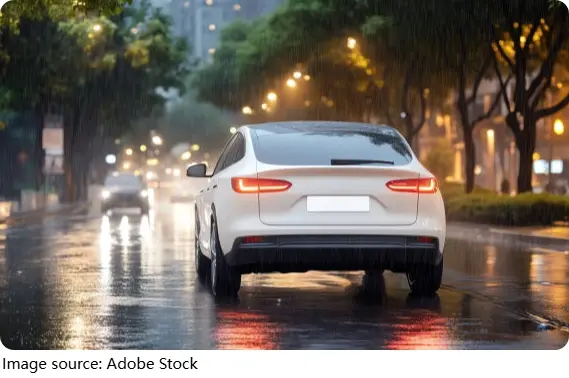
Safe driving in rain depends on adapting to changing road conditions. Slow down, leave more space, steer smoothly, maintain visibility, and avoid uncertain water crossings.
A prepared and measured approach can help drivers maintain better control and respond more effectively throughout a wet-weather journey.