Gullfoss in Winter
Finnegan Flynn
| 05-11-2026
 · Travel Team
Even in the depths of an Icelandic winter, Gullfoss refuses to freeze into silence. The powerful Hvítá River plunges through two dramatic drops, sending mist into a canyon lined with snow and ice. The contrast between moving water and frozen cliffs makes this one of the Golden Circle's most striking winter sights.
Located roughly 115 kilometers from Reykjavík, Gullfoss is accessible as a day trip or part of a slower Golden Circle journey. Short daylight hours, icy paths, and unpredictable roads make winter planning essential. With the right timing, visitors can enjoy spectacular viewpoints without attempting difficult trails or rushing between attractions.
Begin at the Upper Viewpoint
Plan a rock-arch night shoot with reserve fees, gravel-road logistics, three lodging styles, and dark-sky timing.
A food lover's guide to Sweden's Bohuslän coast, with costs and local favorites.
How to plan a Dolomites trip that actually works: where to base, what to see, and what it costs.
What to see and do in Yosemite, from Olmsted Point to El Capitan Meadow!
How Terraced Fields Transform Steep Mountain Slopes Into Productive Farmland While Protecting Soil and Saving Water Today.
Plan a Jackson Hole base, scenic road stops, park fees, and lodging choices for wide Teton Range views.
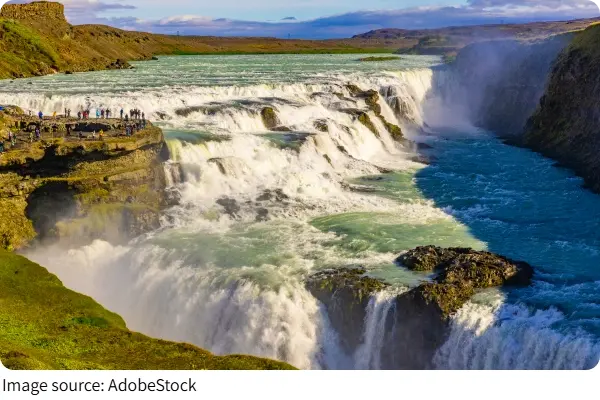
The upper viewpoint is the most practical place to begin a winter visit to Gullfoss. Located near the main visitor center and parking area, it offers sweeping views of the waterfall's two stages and the deep canyon carved by the Hvítá River.
The first drop measures approximately 11 meters, while the second plunges around 21 meters into a narrow gorge. In winter, ice often builds up along the canyon walls while powerful currents continue to flow below.
The upper viewing areas offer excellent photo opportunities without requiring the more exposed descent to the waterfall. Allow around 30–60 minutes to explore the accessible viewpoints and appreciate the changing scenery.
Even relatively short paths can become slippery when freezing spray settles on the ground. Waterproof boots with good traction are important, and removable ice grips can provide additional stability.
The lower walkway, which brings visitors closer to the falls during warmer months, may be closed because of ice and hazardous conditions. Stay behind safety barriers and enjoy the views from the open paths.
Explore the Golden Circle
Gullfoss is one of the main attractions on Iceland's Golden Circle, a popular sightseeing route that also includes the Geysir geothermal area and Þingvellir National Park.
From Reykjavík, the drive to Gullfoss usually takes approximately 1 hour 45 minutes to 2 hours in favorable conditions. Winter snow, ice, or strong winds can make the journey considerably longer.
The Geysir geothermal area is only about 10 kilometers from the waterfall, making it a convenient additional stop. Here, Strokkur erupts regularly, sending columns of hot water into the air against a landscape that may be covered in snow.
Þingvellir, farther west, offers a different experience with dramatic geological formations and an important place in Icelandic history.
A complete winter Golden Circle excursion generally requires seven to nine hours from Reykjavík, including travel and sightseeing. Because daylight can be very limited in December and January, placing Gullfoss around midday is a sensible choice.
The waterfall itself has no general admission fee. Visitors traveling independently should account for vehicle rental, fuel, and any additional services along the route.
Choose Your Winter Transport
Driving independently offers flexibility, but winter conditions in Iceland require careful preparation. The usual route to Gullfoss follows maintained roads, including Route 35, although snow, ice, and wind can affect accessibility.
A four-wheel-drive vehicle can be useful in winter, but it does not eliminate the risks of slippery roads or poor visibility. Drivers unfamiliar with Icelandic conditions may find a guided excursion more comfortable.
Golden Circle coach tours typically depart from Reykjavík and include Gullfoss, Geysir, and Þingvellir. Standard full-day excursions often cost approximately ISK 10,000–16,000 per person, depending on the operator and included services.
Guided transport is particularly attractive during the darkest months, when sightseeing must fit into a narrow daylight window, and road conditions can change unexpectedly.
For independent travelers, the Icelandic Road and Coastal Administration's road information service at road.is and weather forecasts from the Icelandic Meteorological Office at vedur.is are useful planning resources.
If a severe weather warning or road closure affects the route, postponing the excursion is preferable to attempting the drive. A flexible itinerary is one of the most valuable advantages when visiting Iceland in winter.
Stay Near Gullfoss
An overnight stay near Gullfoss can make winter sightseeing more relaxed, particularly for visitors who want to avoid returning to Reykjavík after dark.
Hótel Gullfoss is one of the closest accommodation options, situated a short drive from the waterfall. Its rural location provides convenient access to the surrounding countryside and makes it a practical base for an early visit.
Near the Geysir geothermal area, Litli Geysir Hotel offers another comfortable option. Staying here puts visitors within easy reach of both Strokkur and Gullfoss, allowing them to explore the two attractions without a long drive between them.
Hótel Geysir provides a more upscale alternative, with contemporary rooms and dining facilities beside the geothermal area.
Accommodation prices in this part of Iceland vary considerably with travel dates and room categories. As a broad winter planning allowance, double rooms at nearby hotels may cost approximately ISK 20,000–45,000 per night, with premium options sometimes exceeding that range.
The main advantage of staying locally is flexibility. Visitors can choose the best daylight conditions for the waterfall, spend more time exploring nearby attractions, and avoid completing the entire Golden Circle in one demanding day.
Gullfoss Falls
Photograph the Frozen Canyon
Gullfoss is particularly dramatic in winter because the waterfall rarely looks exactly the same from one visit to the next.
During prolonged cold spells, thick ice formations develop around the canyon, creating white and pale-blue textures beside the dark, rushing water. In milder weather, exposed rock and flowing channels become more prominent.
The upper viewpoints offer broad compositions that capture the two drops and the surrounding landscape. A wide-angle lens is useful for conveying the canyon's scale, while a longer focal length can isolate details in the ice and spray.
Midday often provides the most dependable natural light during winter, especially from late November through January. Low winter sunlight can also produce attractive contrasts when the sky is clear.
Protect cameras and phones from moisture, as fine spray may freeze on exposed surfaces. A lens cloth and waterproof covering are useful additions to a photography kit.
Strong winds can make exposed viewpoints uncomfortable even when temperatures are not exceptionally low. Gloves, a warm hat, and windproof outerwear help make longer photography stops more enjoyable.
Prepare for Winter Conditions
A winter visit to Gullfoss requires more attention to weather and daylight than a summer excursion. In December, the Reykjavík region receives only about four hours of daylight around the winter solstice, while February brings noticeably longer days.
Temperatures near the waterfall often hover around freezing, but wind chill and moisture can make conditions feel substantially colder.
Layered clothing is the most practical approach. Thermal base layers, an insulating midlayer, and a waterproof, wind-resistant outer jacket provide protection against changing conditions.
The Gullfoss visitor center offers a convenient indoor break, with facilities that can be useful during cold-weather excursions. Its operating hours may differ from access to the outdoor viewpoints.
Travelers should also allow additional time for winter road conditions. A journey that appears straightforward on a map can take longer when snow, reduced visibility, or strong winds affect the route.
Rather than filling every hour with sightseeing, prioritize Gullfoss and one or two nearby attractions. This approach leaves room for unexpected delays while preserving enough daylight to safely appreciate the waterfall.

Gullfoss is an unforgettable winter destination, where powerful water continues rushing through a canyon transformed by snow and ice. The upper viewpoints offer spectacular scenery without requiring a demanding hike, while nearby Geysir and Þingvellir make the journey part of a wider Golden Circle adventure. Whether traveling by guided coach or rental car, allow generous time for changing road conditions and limited daylight. Staying near the waterfall can provide extra flexibility, especially during the coldest months. With sensible preparation, Gullfoss reveals a dramatic side of Iceland that feels entirely different from summer.