Riding the Old Trams

Raghu Yadav
| 09-11-2026
 · Auto Team
There is something special about exploring a city aboard an old-fashioned tram. As it moves through narrow streets, past historic buildings and busy squares, the journey becomes part of the sightseeing experience. Unlike a conventional tour bus, a local tram follows the routes people use every day.
From Lisbon's famous yellow trams to Budapest's riverside routes, these journeys combine history, scenery, and affordable public transport. With a little planning, visitors can discover interesting neighborhoods, enjoy beautiful views, and experience the city at a more relaxed pace.
Why the old lines still matter
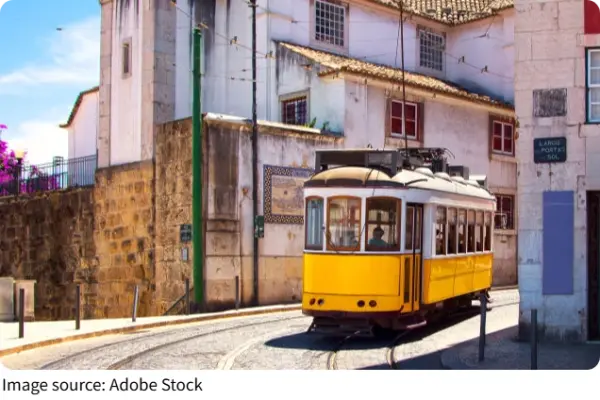
Trams survive in cities where the tracks were laid early and the streets stayed narrow, and that history is exactly what makes the ride interesting. Lisbon's Line 28 climbs through Alfama on rails laid in the early 1900s, and it still uses a stretch of original tramcar stock painted yellow. You are not riding a museum piece for show, you are riding a working route that residents take up the hill because the gradient is too steep for a bus. That practical job is what keeps the line alive.
Europe's electric van market is gaining speed as more businesses switch to cleaner transport!
Lower VAT and stronger EV targets could accelerate electric car adoption across Europe!
How following distance, braking order and ABS help you stop safely when traffic halts without warning.
Stricter emissions rules are approaching, but manufacturers want more time. The outcome could reshape fleet investment across Europe.
No drivers, no steering wheels, no hesitation: a remarkable race in Italy pushed AI to its limits.
New tolls, digital paperwork and stricter border checks are changing European freight transport. Here's what operators need to know.
What to watch for on board
Sit on the right side heading out of the center if you can, because the view opens up on curves. In Prague, the number 22 tram crosses the Vltava near the National Theatre and then climbs toward the castle district, and the last few stops before the top give you a wide view over the river without a single ticket queue. Listen for the bell pattern too, since many operators use two short rings to warn pedestrians at crossings. Small detail, but it tells you the driver is about to move.
Costs and how to pay
Fares stay low because trams are treated as public transport rather than attractions. A single ticket in Lisbon runs about 3.10 USD, and a 24-hour pass is roughly 7 USD, which pays for itself after three rides. In Amsterdam, a one-hour ticket is around 3.80 USD. Buy from the machine at the stop or tap a contactless card at the reader inside the car, and validate it immediately. Inspectors do board, and an unvalidated ticket gets treated the same as no ticket at all.
A practical way to plan
Check the route map before you board and pick two or three stops with something you want to see nearby, then treat the tram as a moving break between them. Line 28 in Lisbon gets packed between 10 a.m. and 4 p.m., so ride it early or after the evening rush and you will likely get a seat. Board at a stop further out, near Graça, rather than at Martim Moniz where the queues form. One more thing, keep your bag in front of you and your phone in a pocket, since crowded cars draw pickpockets on the busiest routes.
Where the ride takes you
Some lines are worth the fare just for the endpoint. Budapest's number 2 runs along the Danube embankment past the Parliament building, and the whole trip takes about 15 minutes for a single ticket price. In Milan, the number 1 line runs through the Brera district and drops you off near the Sforza Castle grounds. You get off, walk ten minutes, and you are somewhere you would not have found on foot from your hotel.
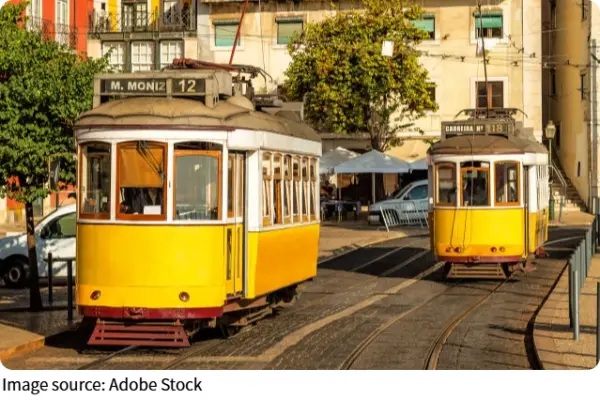
Historic trams offer a simple and memorable way to explore European cities. They connect famous landmarks with everyday neighborhoods, revealing architecture, street life, and scenery that visitors might otherwise overlook. Whether you ride Lisbon's yellow Tram 28, follow the Danube aboard Budapest's Tram 2, or explore Prague on Tram 22, the journey can be as enjoyable as the destination. Choose a route, check the fare, and leave time for an unexpected stop. Sometimes the best city tour is simply a ride on public transport.