Squirrel Tail Secrets

Caroll Alvarado
| 24-11-2026
 · Animal Team
A squirrel's bushy tail is more than an attractive feature. Whether it is jumping between branches, resting inside a tree hollow, or exploring its woodland home, the tail plays several important roles.
It helps the squirrel maintain balance, provides warmth, supports its defensive responses, and allows it to communicate with others. Each function helps this active little animal manage its daily activities.
1. Helping Squirrels Maintain Balance
Steadying a squirrel mid-leap or high in the canopy is one of its tail's signature jobs. Squirrels spend hours scaling trunks, scurrying along thin limbs, and vaulting across gaps between trees—acrobatics that demand split-second coordination. The tail works like a balancing tool. When a squirrel travels along a narrow branch, it adjusts its tail position to help keep its body steady. This is especially useful when changing direction or moving across uneven surfaces.
Discover Why Rabbit Ears Are So Special and How They Help With Hearing, Body Temperature, Communication, and Health!
Why Is Your Corgi so Stubborn? Discover Why It Acts This Way and Learn How to Build a Stronger Bond at Home
A Slow Sway, a Sharp Flick, a Puffed-up Bottlebrush. Each Tail Move Means Something Specific
Why do zebras drink in groups? Learn how their waterhole habits help them stay alert to danger!
What makes a lion's mane so important? Learn how it helps with protection, display, and competition
Chinchillas Are Adorable, But Are You Ready? Discover the Essential Care Tips Every New Owner Should Know
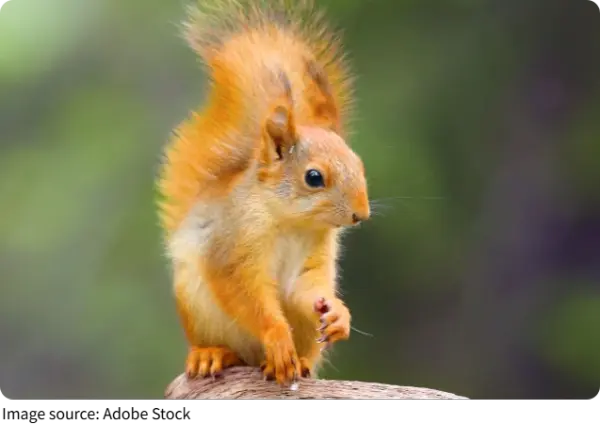
Think of the tail as a live counterbalance and steering rudder combined. While walking a narrow limb, a squirrel shifts its tail side to side to offset wobbles and sharp turns. During a long leap, flaring the thick fur adds air drag to slow a fall while swishing it left or right fine-tunes mid-air aim for a clean landing.
2. Providing a Defensive Advantage
A squirrel's tail can also contribute to its defense. Although squirrels are small, they have several ways to respond when they feel threatened.
One survival trick seen in several squirrel species is fur slip—if a predator grabs the tail tip, the outer skin and fur sheath can tear away so the squirrel slips free. Unlike lizards, squirrels do not regrow a lost tail, and the remaining stump is left bare, so this escape mechanism happens only under real danger.
Fluffing out a bushy tail also makes a squirrel look bulkier from behind, helping break up its outline against bark or foliage. Raising or twitching the tail pairs with alert posture to signal wariness whenever a threat lurks nearby.
3. Keeping Warm in Cold Weather
Another valuable function of a squirrel's tail is providing warmth. Squirrels need comfortable places to rest, particularly when temperatures become low.
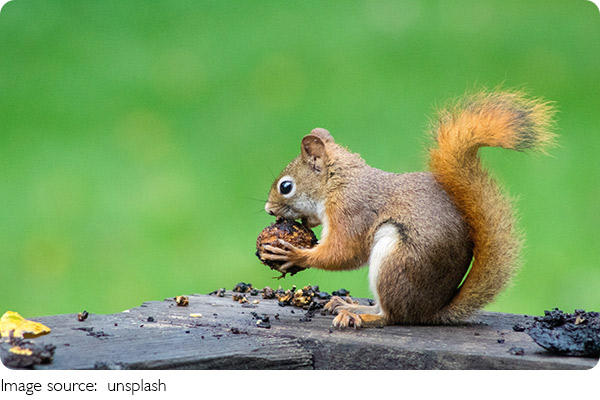
When curling up to sleep, a squirrel tucks its nose and paws in and wraps its bushy tail around its body like a cozy scarf. Dense winter fur traps warm air to create vital insulation against chilly drafts.
Squirrels often choose sheltered places, such as tree hollows or spaces in the ground, for resting. Their furry tails offer additional warmth while they remain inside these locations.
On scorching afternoons or light rain showers, a squirrel can flip that same thick tail overhead like a sunshade or umbrella to shield its head and back from glare and drizzle.
4. Communicating With Other Squirrels
Squirrels also use their tails as part of their communication. Different movements can provide visible signals to other squirrels nearby.
When a squirrel spots a hawk, cat, or curious dog, rapid back-and-forth flicks—often called tail flagging—send a clear visual alert to neighbors and show a predator it has been detected. Because squirrels often forage a few yards apart, bold tail signals broadcast warnings across open space without the risk of moving closer. Although tail movements are only one part of squirrel communication, they demonstrate how body language helps animals interact.
5. How the Tail Supports Gliding and Seasonal Shifts
Different squirrel species put their tails to specialized work across the year. Flying squirrels, for instance, glide between trees using skin flaps between their limbs while using a flattened tail as a stabilizer and brake just before touching down on a trunk. Back on solid branches, tree squirrels do not true-hibernate in winter; instead, they curl inside leafy dreys or tree cavities with their tails wrapped tight to ride out cold snaps.
Final Thoughts
Watching a squirrel flick its tail in a park or backyard turns a familiar sight into a live lesson in wildlife survival. Every twitch, wrap, and mid-air spread helps the animal stay nimble, cautious, and warm through every season.
The importance of a squirrel's tail
Video by Squirrels at the window